Wednesday, April 26, 2006

Scientific Proof that the Paunch Must Go

Belly fat blues
A noxious type of fat raises risk for heart disease, diabetes and more. Luckily, it's easy to rid with exercise.
By Shari Roan, Times Staff Writer
April 24, 2006


HAVING a little paunch is just no good with a Speedo or bikini. Health-wise, it's none too pretty either.

That bulge is the outward sign of a deeper problem: visceral fat, a kind of biological monstrosity that, in excess, wreaks havoc on the body, raising the risk for heart disease, diabetes, possibly even dementia and some types of cancer.


Lying deep inside the body, wrapping around the liver and other major organs, visceral fat acts like a kind of organ itself — spewing out bad hormones and squashing the production of good ones. It sets up the body for sickness as the years roll by and additional fat accumulates.

"Visceral fat is very bad for you," says Richard N. Bergman, a professor at USC's Keck School of Medicine. "It seems to have a more negative outcome on health than overall fat."

The evidence now is so compelling that some experts suggest it's time to forget about scales and weight loss and focus on waists and "inch loss."

Luckily, visceral fat doesn't appear to be a particularly stubborn enemy. Health experts have discovered that consistent, moderate exercise by itself appears to help the body rid itself of vast amounts of deep abdominal fat — even when the scales show the pounds aren't dropping very fast.

This emerging science carries a message for consumers: Measure your waist circumference. And reduce it if need be. Doing something about that paunch could help save your life.

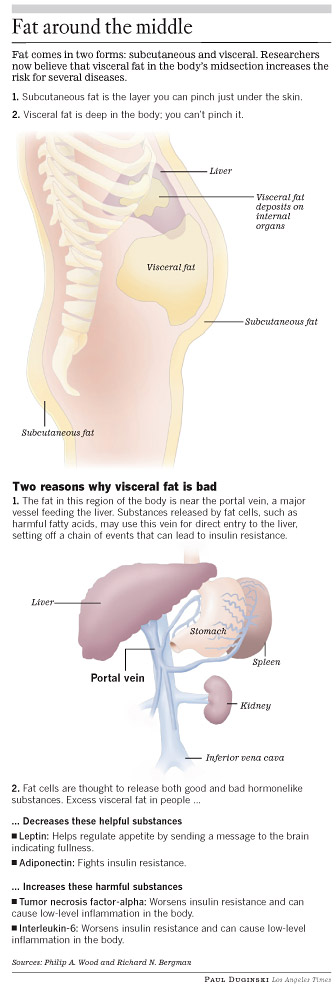
Recent studies on visceral fat help explain a well-established fact: that having a pear shape is more healthful than having an apple shape. A pear shape is caused by subcutaneous fat resting just under the skin. Apple is caused by the deep, visceral fat. What this means is that although both types of people — apple and pear — can be overweight, the person with the apple shape has more health risks.

It also means that people with normal weight can be at a higher health risk without realizing it.


Most people gain abdominal fat with age, but research shows the tendency to put on weight around the middle may be inherited. A study published this month in the Proceedings of the National Academy of Sciences identified particular genes that appear to dictate how fat develops and where it's stored.

A long list of illnesses

Meanwhile, the evidence for visceral fat's ill effects is mounting.

In research published in November in the Lancet, doctors concluded that a person's waist measurement is a more accurate predictor of heart attack than the body mass index, or BMI, which is a weight-to-height ratio.

Analyzing data from 27,000 people in 52 countries, the scientists found that BMI measurements were only slightly higher among people who had had heart attacks compared with those who hadn't. But heart attack sufferers had a much higher waist-to-hip ratio (a measurement that reflects abdominal fat) compared with those who hadn't, regardless of other cardiovascular risk factors. This finding was true for men and women in every ethnic group.

"This was the first study that really documented this relationship across all ethnic groups," says Dr. Arya M. Sharma, a co-author of the study from McMaster University in Hamilton, Ontario, Canada, and director of the Canadian Obesity Network.

Other studies have linked visceral fat to metabolic syndrome — a grouping of risk factors, such as high cholesterol and high blood pressure, that can precede diabetes and heart disease. For example, Wake Forest University researcher Barbara Nicklas published a study in 2004 showing that among overweight, post-menopausal women, those with the most abdominal fat were the most likely to have metabolic syndrome.

Additional illnesses may be influenced by excess abdominal weight too. A Kaiser Permanente study presented earlier this year at an obesity conference showed that people with the most abdominal fat were 145% more likely to develop dementia compared with people with the least amount of abdominal fat.

Research has also linked deep abdominal fat to the development of gallstones and breast cancer in women and overall risk of premature death in men. In a study of 291 men published online earlier this month in the journal Obesity Research, doctors found that men with more abdominal fat died in greater numbers, independent of all other risk factors the scientists examined. A man with 2.2 pounds of visceral fat has double the risk of death compared with a man with 1.1 pounds of fat.

Fat's harmful factors

Experts aren't sure why fat can be bad in one area of the body and yet not so bad in others. But they have two strong theories. One has to do with what visceral fat does. The other has to do with where it's located.

Today scientists know that fat is more than just inactive blubber. Fat cells were once thought of as inactive storage units containing a droplet of oil — the fat — that expand in a person who is gaining weight and shrink with weight loss. Now researchers have adopted a more complex picture of fat cells as mini-endocrine factories that produce a range of good and bad substances.

"Once we got beyond the bag-of-fat concept, we found there were a lot of things going on with those cells," says Philip A. Wood, director of genomics at the University of Alabama at Birmingham and author of the book "How Fat Works."

Scientists now know that fat churns out an array of hormones.

The first such substance was discovered in 1994. Researchers identified a hormone, leptin, which is made by fat cells to signal a feeling of fullness.

Researchers now think that leptin, which plays a helpful role in regulating weight, goes down in people with excessive abdominal fat — leading people to eat more and pack on the pounds.

Visceral fat cells make another beneficial hormone, adiponectin, which helps insulin pull sugar from the bloodstream into cells to be used for energy or stored. This also declines as visceral fat levels go up. That can lead to insulin resistance, a condition in which cells no longer respond properly to insulin and which can lead to diabetes.

"Adiponectin going down is exactly what we don't need to happen," Wood says.

Visceral fat also causes some harmful substances to surge, including two proteins called interleukin-6 and tumor necrosis factor-alpha. These substances are bad players because they are thought to incite chronic, low-level inflammation in the body.

"Inflammation itself is not bad," says Nicklas, an associate professor of internal medicine at Wake Forest. "When our bodies are injured or sick we need that to heal. But there is an underlying degree of chronic inflammation with excess abdominal fat." Chronic inflammation aggravates heart disease.

This ability to promote low-level inflammation in the body may in part explain why excessive visceral fat is linked to a higher risk of dementia, says Rachel Whitmer, a research scientist with the Kaiser Permanente Division of Research in Oakland.

In a recent study, Whitmer examined data from more than 6,700 people who were measured for abdominal obesity at ages 40 to 45 and were followed for more than 20 years. Those with the highest amounts of abdominal fat were much more likely to develop dementia. "Being overweight is not only bad for your heart, it's bad for your brain," she says.

Whitmer's theory is that inflammatory substances released by visceral fat may enter the brain and damage nerve cells, contributing to cognitive decline.

Visceral fat may be worse than fat in the hips or buttocks not just because of the substances it makes — but because of its location. It sits near the portal vein, a major vessel that carries blood from the abdominal organs. "Visceral fat dumps its products into this vein that goes right into the liver," Bergman says.

These substances include free fatty acids — fat that circulates in the bloodstream — which appear to make the liver produce too much sugar, upsetting the body's ability to produce the right amount of insulin. This sets up the body for insulin resistance and possibly Type 2 diabetes.

The discovery that excess visceral fat functions almost like an organ, actively producing substances that can ultimately affect overall health, has changed the way many doctors now think about obesity.

"For an obese person with metabolic risks, we probably need to treat what the fat is doing to them, as opposed to trying to get them to lose weight," Nicklas says. "The idea is treating the symptoms of obesity rather than the obesity itself."

And the first step in that process could be pulling out an old-fashioned tape measure.

A simple test

Measuring the waistline with a tape measure hasn't been in vogue since the days of the girdle. Yet increasing numbers of researchers — including the Obesity Society, a major research group — are saying that waist measurements should be part of every checkup.

"You go to the doctor and get your height and weight measured all the time, but physicians don't measure the waist," says Nicklas. "I think it should be measured."

Some weight-loss groups are making waist measurement part of the weekly weigh-in. At Lindora weight-loss clinics, waist circumference is measured each week along with weight loss. It can end up being a positive experience, says Dr. Joseph Risser, director of clinical research at Lindora Medical Clinics. Studies show most dieters tend to have inflated estimates of how much weight they can or will lose. It can be discouraging when the pounds don't melt away.

But, Risser says: "People are encouraged by seeing changes in inches even without losing weight. If they go down a couple of dress sizes or pant sizes, even if the scale shows only 10 or 15 pounds [of weight loss], they are encouraged by that."

Having a tape measure wrapped around his middle was embarrassing at first, admits John Fiore, 47, a Laguna Niguel man who enrolled in a Lindora program in December.

But, he says, waist measurements have helped him appreciate his healthful new approach to eating and exercise. Along with a 64-pound weight loss, Fiore has lost 6 inches around his waist. Moreover, a recent ultrasound scan of his abdomen showed that he lost the large cluster of fat around his liver.

"I know it's important, at my age, to lose that weight around the middle," he says. "My clothes fit better too."

At least it's not stubborn

That is probably the best news about visceral fat: It's not all that hard to lose, and losing even a little might make a big difference in cardiovascular health. Sit-ups and liposuction won't work (sit-ups merely tighten the muscle and liposuction only removes subcutaneous fat), but studies show that regular diet and exercise can lead to a substantial drop. "It's easier than reducing any other fat because the abdominal fat is metabolically very active," Sharma of McMaster University says.

In fact, studies show that people who lose only 10% to 15% of total body weight can still lose up to 30% of their visceral fat — and reap fast, important benefits. A 2001 study published in the American Journal of Clinical Nutrition showed that white and black women on a diet-and-exercise program lost 41% and 37% of their visceral fat, respectively, with a total weight loss of about 15%.

And in a study of 564 patients at Lindora, Risser found that reducing the waistline correlated with drops in blood pressure, cholesterol levels and blood sugar.

Ultimately, scientists hope that efforts to understand how visceral fat functions may lead to medications that target it and its byproducts. One drug under investigation, rimonabant, has been shown to help reduce waist circumference. For now, however, exercise may be the most effective way to reduce abdominal fat.

A study published in 2003 in the Journal of the American Medical Assn. found that people who exercised moderately for a year lost from 3.4% to 6.9% of intra-abdominal fat. The new study in Obesity Research finding higher death rates in men with excessive visceral fat also found that those who exercised tended to lose more visceral fat than those using strictly diet.

A third study, from the University of Pennsylvania, found that even among women who didn't diet, a twice-a-week strength-training regimen still helped slow the amount of visceral fat gained over two years.

"Visceral fat is sort of like a checking account: easy in, easy out," Wood says. "Excess peripheral fat, such as fat in the rear end, is like a retirement account. It's not that easy to get out."

*

(INFOBOX BELOW)

Fat around the middle

Fat comes in two forms: subcutaneous and visceral. Researchers now believe that visceral fat in the body's midsection increases the risk for several diseases.

1. Subcutaneous fat is the layer you can pinch just under the skin.

2. Visceral fat is deep in the body; you can't pinch it.

Two reasons why visceral fat is bad

1. The fat in this region of the body is near the portal vein, a major vessel feeding the liver. Substances released by fat cells, such as harmful fatty acids, may use this vein for direct entry to the liver, setting off a chain of events that can lead to insulin resistance.

2. Fat cells are thought to release both good and bad hormonelike substances. Excess visceral fat in people ...

... Decreases these helpful substances*Leptin: Helps regulate appetite by sending a message to the brain indicating fullness.*Adiponectin: Fights insulin resistance.--

... Increases these harmful substances

*Tumor necrosis factor-alpha: Worsens insulin resistance and can cause low-level inflammation in the body.

*Interleukin-6: Worsens insulin resistance and can cause low-level inflammation in the body.

*

Sources: Philip A. Wood and Richard N. Bergman

Yet another reason to turn the TV off

MTV's 'Super Sweet 16' Gives a Sour Pleasure

By LOLA OGUNNAIKE
Published: April 26, 2006
Sophie Mitchell, a high school senior in Jupiter, Fla., had no intentions of turning 16 quietly. She wanted that birthday to be an epic event — no cake-and-ice-cream social or pajama-and-pizza sleepover would do. No, her party would be a ridiculously lavish, invitation-only affair, inspired by the film "Moulin Rouge." There would be can-can dancers, a fleet of stretch limousines for friends and family and a $1,500 cake.


MTV
Sophie Mitchell of Jupiter, Fla., at her sweet 16 celebration on MTV.

Readers’ Opinions
Forum: Television
"I wanted something with a lot of substance," said Sophie, now 17, without a hint of irony, "not just a regular party but pure entertainment for everyone."

Sophie is just one of the dozens of privileged kids who have had their coming-of-age extravaganzas captured on MTV's hit series "My Super Sweet 16" (Wednesdays at 10 p.m., Eastern and Pacific times; 9, Central Time). The show, in its third season, follows teenagers as they painstakingly plan their elaborate celebrations (which can cost as much as $200,000), argue over the details with their parents, fret over guest lists and shop for their first cars. There are tears and tantrums and nouveau-riche displays of conspicuous consumption. Marissa, a daddy's girl from Arizona, dyes her two poodles pink, so they'll match her dress. Her party was the show's season opener.

"It's like Jerry Springer for rich kids," said Zena Burns, entertainment director at Teen People magazine. Her readers can't get enough of the show, she said.

"You're either the type of kid that aspires to have that over-the-top party, or you're the type of kid that finds that absolutely repellent, but you still can't stop watching," said Ms. Burns, a fan of the series. "And I have just as many adult friends who watch it and do the water cooler recap the next day."

Predictably, the show has its share of critics. "Their blingy flings are not celebrations of accomplishment; they're celebrations of self," Ana Marie Cox, a Time magazine columnist, wrote in this week's issue. "What used to mark the end of childhood now seems only an excuse to prolong the whiny, self-centered greediness that gives infantile a bad name." Ms. Cox compared watching the show to eating an entire sheet cake, "wax decorative candles and all."

The show follows a simple but wildly successful formula: (1) kid makes a series of high-priced demands (a fireworks display, a helicopter ride, perhaps a harem of belly dancers); (2) parents capitulate and cough up the cash; (3) kid gleefully humiliates the uninvited; (4) something goes awry; (5) kid has a meltdown and repeatedly refers to self in the third person; (6) party miraculously comes together, and kid is presented with an automobile before his salivating, less fortunate peers. In Marissa's case, her father, who owns three auto dealerships, presented her with two cars: a red convertible for the weekend and a sturdy S.U.V. for the week.

Nina Diaz, the show's creator, said that in addition to receiving submissions, she worked with a casting team of five who scoured the country talking with party planners, florists and catering-hall owners, in search of the type of teenagers who make for great television. Each season about 200 are interviewed, but only 8 or 9 make the cut, Ms. Diaz said.

"We're looking for the parties to be over the top, and we're looking for originality," she explained. "We're looking for personality, how they visualize their grand entrance, how they're going through the process of inviting people."

While Ms. Mitchell's party was organized in four weeks, other teenagers have dedicated nearly a year to ensuring that their big one-six will be memorable. Aaron Reid, son of the music mogul L. A. Reid, took five months to plan his party. He had just moved to New York from Atlanta and was eager to make a name for himself at his new prep school, to establish himself as more than L. A. Reid's son. His invitation was an MP3 player. At his party, held at Jay-Z's 40/40 club last November, the producer Jermaine Dupri was the D.J., the rapper Kanye West performed, and Diddy, Aaron's godfather, made an appearance. Poppa Reid clearly pulled some strings.

"Everybody else spent hundreds of thousands of dollars, but I didn't spend anything," Mr. Reid said proudly. "I got my friend's club. I got my friend to perform and I got my friend to D.J."

"There's absolutely no way that I would ever spend that type of money," he continued. "I think it's over the top and sickening and a real poor representation of wealth."

Still, Dr. Srinivasa Rao Kothapalli, a prominent cardiologist in Beaumont, Tex., is more than willing to relinquish his checkbook. His daughter Priya turned 16 earlier this month, and she is in the throes of planning a joint birthday-graduation party with her elder sister, Divya, 18. "If you can afford to have a grand celebration, then why not," said Dr. Kothapalli, who immigrated to the United States from India in the mid-1980's. "It's the American way. You work hard and you play hard."

Born with silver ladles in their mouths, his daughters have certainly mastered the latter. Their Bollywood-themed party for 500 guests will be held in the family's backyard — all 4½ acres, behind the 10,000-square-foot house. The Format, their favorite band, will perform. And they will make their grand entrance on litters, during an elaborate procession led by elephants. The sisters, who plan to perform a choreographed routine at their to-do next month, are also taking dance lessons, and they've enlisted the help of a trainer.

"We both want to lose three pounds," said Priya, who received a Mercedes convertible and an assortment of diamond jewelry for her birthday. Her sister's graduation gift package included a Bentley, diamonds and two homes in India.

"I was really surprised," Divya said, "because I was only expecting a Bentley and one house."

Just last month they gave a preparty where invitations to their coming event were handed out by body builders whom Priya ordered not to smile. "Assistants are not supposed to smile," she explained.

Over the years, the sisters' ostentatiousness has earned them enemies. "Some people give us dirty looks and mock us," Divya said. "They're just jealous." MTV cameras following the pair around have not made things easier. "Sometimes people are fake nice because they want to be invited to our party; it's so annoying," she said.

Priya added, "It's pathetic when people suck up." Still, dealing with sycophantic classmates and a bit of teasing is a small price to pay for the spotlight. "We both love attention—that's one of our main motives for having the party," Divya said. "The more attention the better."

Ms. Burns was not surprised. "Given the advent of the Internet and reality television, a lot of kids think that fame is a realistic goal," she said. "What better way to be famous in your own world than throw the party of the year?"

Appearing on the series has meant instant pseudocelebrity for many of the teenagers. They've been asked to sign autographs and pose for photos. None of those interviewed seemed to mind the newfound attention, though not all of it has been positive. After her episode was shown last season, Sophie, the Florida teenager, a high-strung diva given to pronouncements like "the moral of this story is I'm always right," received tons of hate e-mail.

"At first I was reading it all, but then I had to stop because I was punishing myself," she said. Sophie's mother, Dale, a veterinarian, was quick to defend her daughter, blaming editing for making her look like an ungrateful monster. "My daughter and I have an adoring relationship; we're best friends," she said, "but that's not interesting to people. People want the guts and the juicy stuff."

Sophie was just as quick to defend her mother's decision to spend $180,000 for her party. "Unless they were crazy or hated their child, any parent who was financially able would do it," she said.

Affording your dream college

--------------------
Affording your dream college
--------------------

Negotiation 101 begins with the financial aid director.

Gail Marksjarvis
Chicago Tribune

April 23, 2006

Who would have thought that one piece of mail could stir so much
emotion?

But that's what happens to families this time of year when the initial
elation over fat college acceptance envelopes morphs into sticker
shock.

In May, students generally need to let colleges know if they will
attend next fall, or pass up offers to favorite institutions and settle for
more affordable options. For many parents, that poses sleepless nights
as they face $20,000 or $40,000 annual costs to make their children's
dreams come true.

But there are still opportunities to make the price tags less
terrifying.

Don't take those college letters at face value. One college may appear
to offer a better financial aid package than another, but you might be
able to change that.

It's time to negotiate for better financial aid.

Financial aid offices expect it, and frequently offer more grants or
scholarships so they don't miss out on students they want.

But just don't call it "negotiation" when you make the call, said
Kalman Chany, a New York financial aid consultant and author of Paying for
College Without Going Broke.

"Use tact and don't reenact the Jerry Maguire scene: 'Show me the
money,' " he said.

The process is not unlike negotiating on a car, but the criteria is
different, and the style less overt. This is, after all, about a loftier
goal -- educating a person. So keep the discussion on that level, but do
your homework first.

To be successful, understand that colleges approach financial aid in
two ways.

There's a formula for allocating financial aid based on family
finances. That has been used by the staff to compute the financial aid it has
offered. Using the Free Application for Federal Student Aid, known as
the FAFSA, and perhaps the CSS Financial Aid Profile forms, they have
calculated what the formula shows you can afford to pay for college.
That's the "expected family contribution," and calls for both parents and
the student to provide a certain amount of income and savings.

The best part of the aid package is the free money -- grants and
scholarships.

While the formula is precise, there is play in the system. Each college
is different, some with more room to negotiate than others. The outcome
of the negotiation will depend on factors such as whether it's a
private or public college, how attractive a child is to that institution, the
challenges the college is facing in filling next fall's class, and the
size of the endowment the institution has to provide grants or
scholarships.

If a child wants to attend a public college, there is usually no room
to negotiate because the formula is rigid and scholarship money limited.
The exception would be if family financial conditions have changed
since the student applied for aid. If a parent has lost a job, or the
family suffered another financial setback, make sure the financial aid
office takes that into consideration.

Also do that with private schools.

"Offer documentation," Chany said. For example, show records that
indicate you have lost overtime pay or had unusual medical expenses.

You may have some luck, he said, if you can show an extraordinary
necessary expense such as a roof repair after a storm.

But private colleges have more flexibility to add grant money.
Consequently, low- and middle-income students often can attend a private school
at a better price than they would pay at a public university.

Here's what to do: Call the financial aid office and ask to speak to
the director. Tell the director that your child wants to attend that
institution, but you are agonizing over the financial impact on your
family. Also mention that your child has a less expensive option. Then ask if
there is anything that can be done to help make the school more
affordable.

Don't say there is less expensive alternative if you don't have one.
You should be prepared to fax another college's offer when negotiating.

You will be in the best position if your child has been accepted and
given an attractive financial aid package from an institution that is
viewed as a close competitor to the college your child wants to attend.
Use the college rankings assembled by U.S. News and World Report to help
spot competitors. At its Web site (www.usnews.com/us
news/edu/college/rankings/rank index-brief.php) you will see that colleges are
categorized by top universities or top liberal arts colleges. Then there are
lower tiers, or less prestigious colleges, ranked by "tier 3" and "tier 4."

If you have a great financial aid package from a tier 3 college, but
the student wants to attend a college ranked high among "top" colleges,
you probably won't have the negotiating strength that you would if you
also had a great offer from another top college.

Your negotiating position may be enhanced depending on where colleges
rank. For example, if you were admitted to Duke University, ranked fifth
best by U.S. News, and liberal arts school Goucher College, ranked No.
94, you might be in a better position to negotiate with Goucher than
Duke. On the other hand, Duke and Northwestern University, both among the
top 15 schools, might compete more aggressively for very attractive
students.

What's attractive to one college may be less so for another. For
example, all colleges compete to land students with the highest SAT or ACT
scores. When they accept students with high scores, it brings the
colleges up in the rankings, and the schools use their rankings to market
themselves to top prospective students.

So some colleges will attempt to lure students with high SAT scores by
offering merit scholarships. Don't expect the scores to mean much at
universities such as Yale or Harvard, where top SAT scores are the norm
and fewer than 11 percent of students who apply are admitted.

But look through the college rankings for colleges that accept half or
75 percent of the students applying, and there will be more opportunity
for a student with high SAT scores to receive an inducement to attend.
Also look at the average SAT or ACT scores for that college. If your
child is on the high end or above, you are in a good position to land
some merit aid.

A student also may be attractive if he or she has a special talent, is
from a particular ethnic or racial group or from a part of the country
that the admissions staff would like to represent in its student body.

If during the application process your student received special
interest by the admissions office, a coach or academic department, contact
that person and tell them about your financial concerns. He or she may be
your advocate with the financial aid office.

"Some parents are afraid to do this because they are afraid the offer
will be withdrawn," Chany said. "But at worst, they will just decline to
provide extra aid."

When trying to evaluate the attractiveness of your child to a college,
realize that it is difficult to guess on the face of it. A small
liberal arts college, for example, could have had few applicants that year
from a student with a specific talent. So, for example, if the college
needs a cello player, the admissions staff might want to make sure such a
student is admitted.

While you might receive a quick response from a college, you also could
be asked to submit a formal written appeal of your financial aid
package.

If you're still negotiating May 1, Chany suggests asking if you can
delay your response to the college's acceptance letter.

But if that doesn't work, take a deep breath and look at the cost of
college through objective eyes to evaluate whether you can truly afford
it or not.

The Chicago Tribune is a Tribune Publishing newspaper. E-mail Gail
MarksJarvis at yourmoney@tribune.com.

Copyright (c) 2006, Orlando Sentinel

Visit Sun-Sentinel.com

Tuesday, April 18, 2006

Toni Morrison's fabulous Locs


Here's a picture of what I want my locs to look like when they mature. Toni Morrison has gorgeous locs. This is her with Selma Hayek at the Cannes Film Festival

Friday, April 07, 2006

Thursday, December 01, 2005

New way to post pics, Mp3's and videos?

David Pogue
Upload, Store, Play and Share in a Few Clicks
Glide Effortless users can create "containers" at the bottom of the screen into which items can be sorted.

Published: December 1, 2005
IN Hollywood, young screenwriters have "elevator pitches" always at the ready - pithy descriptions of their screenplays, intended to capture the imagination of passing movie executives. You know: "It's 'Titanic' on a spaceship." "It's a female 'Harry Potter.' " "It's 'Raising Arizona' meets 'Leaving Las Vegas.' "

Most of the time, high-tech companies can describe their products with equal efficiency, but not always. Take, for example, Glide Effortless, a new Web service that went live yesterday. "What is Glide Effortless?" its news release asks. "It is a compatible browser-based online solution with integrated software and service environments, providing powerful file management, creation, communication, sharing and e-commerce capabilities."

Which leaves only one question: "What is Glide Effortless?"

Here's another stab: it's a personal Web site (www.glidedigital.com) to which you can upload your favorite photos, MP3 files, video clips and even Word, PowerPoint or PDF documents. (A separate companion program speeds the uploading process by letting you drag and drop big batches of files at once.) Once everything's posted on the Web site, you can do two things with it: manage it or share it.

TransMedia, the company behind Glide, has some legitimate gripes about the way you have to perform these tasks on a Mac or PC. For example, you have to learn and use a different program to work with each file format: one to play music files, another to display photos, a third to play videos, and so on. Sending your masterpieces to other people is a drag, too. If you attach your photos or videos to e-mail, you usually wind up overflowing the recipient's in-box and causing headaches for everyone. Posting your files on a Web site or a blog (Web log) is a better solution, but that requires more geeky knowledge than average people care to acquire.

Glide avoids all of these problems. It treats each file type - photos, songs, videos, documents - nearly identically, representing each file as a thumbnail icon in your personal stash. You use a menu to switch from one "environment" (say, photos) to another (like music). At the bottom of each environment is an area where you can create "containers" - that is, playlists (for music and video clips), albums (for photos), address book groups (for e-mail), and so on. You fill up these containers by simply dragging the appropriate thumbnails from the top part of the screen. You can even drag music files into photo or video containers, thereby creating musical soundtracks.

When you want other people to see your stuff, you can send invitations by e-mail. (Glide can import your address book from Outlook or Entourage.) When your recipients click the link in your message, they arrive at a Glide Web page, where they can view or play the files.

THIS system means that you never actually send any files, so you don't clog anyone's in-box. More important, you now have total control over the material. From the moment you upload a file to Glide, it's converted into an online preview. Your visitors can listen to one of your songs or watch one of your videos, but they can't download it, keep it, or even replay it without returning to the Web site.

As a result, you can limit how many times somebody plays or watches something, or specify a window of opportunity (say, Dec. 5 to 20) for people's access. You can even play Big Brother by tracking how many times each person has viewed or played a certain goody.

With just a few clicks, you can also publish one of your containers as either a Web page, complete with embedded pictures and videos, or a blog entry. It's almost automatic, although you have no control whatsoever over the layout of the result.

All of this is fun to use, thanks to a full-blown online operating system that Glide designed itself. After all, thought TransMedia, why make the site look like Windows or Mac OS X, when a custom design could be simpler and better tailored to Glide's functions?

In the Glide OS, each object on the screen - thumbnails, containers and so on - bears a tiny "badge" that resembles a pie chart. When you point to it, a round menu sprouts at your cursor tip. It lists commands pertaining to that object (Delete, Edit or Publish, for example), arrayed like colorful slices of a pizza.

Here's where you first get an inkling that for all of Glide's genius, it's also tainted by some profound problems.

For example, you quickly realize that a circle is not a very good shape for a menu. Because each command's name must be squeezed into a triangular wedge, the number of commands and the lengths of their names are severely restricted. As it is, some of Glide's command names (like "Download") barely fit on their slices.

Then there are those rows of thumbnail images. They make it easy to see what you're dealing with; video thumbnails play a snippet of moving images, and music files bear album-cover art. But once your collection grows beyond one screenful, those horizontal rows of icons present an infuriating challenge. You can't resize them to fit more on a page, and you can't view them as a scrolling list; you can only page through them as you would with results of a Google search. They take their sweet time to appear, too.

Worse, although thumbnails excel at conveying visual information, they fail miserably at conveying text information - like their names. Only a few characters of each file's name fit beneath each Glide thumbnail; on song names, all you get is "12 Rolling Th.." and "10 It's Too L.." The only way to see the full names of your songs is to double-click their icons one at a time, opening successive Info panels.

In spots - notably the e-mail and chat environments - the Glide online operating system gets in its own way, requiring ridiculous multistep procedures for what, in Windows or Mac OS X, would be the work of a few keystrokes. For example, addressing an outgoing e-mail message and attaching a file requires switching back and forth between multiple screens.

Figuring out how to do some simple tasks, like backing out of a photo container to your full collection, are challenges for puzzle lovers only. In rejecting the traditional operating-system elements, TransMedia has thrown out significant bits of baby along with the bathwater.

You can sign up for any of three different Glide Effortless plans. There's a free service with a 100-megabyte storage limit for your files; a $5-a-month plan with 1.5 gigabytes of storage; and a $10 monthly plan with three gigabytes of storage, along with video and audio conferencing. (Discounts are available if you pay for a year up front.) Right now, Glide is for Windows only; according to the company, Mac fans can sign up starting on Dec. 25.

The Glide of today is already a vast collection of tools, integrated into a software ecosystem that's half genius and half nuts. But it's nothing compared with what the company says is on the way: a full-blown Internet music store; an online store that lets you order products by dragging their icons into a shopping-cart "container"; a Unix version; a timeline calendar module; a built-in photo-editing suite; playback of music file formats beyond MP3; and even a corporate version "for the sale, promotion and distribution of media to consumers" that will offer a project-scheduling screen, among other perks.

Furthermore, TransMedia says that soon you'll be able to share one of your songs with friends - and if they like it, they can buy a copy-protected version of their own. The company will profit from the sale, of course, but so will you; you'll get a discount on your next music purchase.

Then there's the cellphone version of Glide, the set-top TV boxes and the customized versions the company hopes to sell to cable, phone and entertainment conglomerates.

All this from a company of only 24 people?

It's a little hard to believe. And sure enough, there are some telltale signs that the company may have bitten off more than it could chew. The company acknowledges, for example, that when the Glide music store opens, it won't offer music from the Big Four record companies - only the smaller independents. There's still no user manual or online help screens. And only 48 hours before the grand opening, big chunks of the service were still being snapped into place.

Still, Glide's core idea is unassailably fresh and useful: a centralized, Web-based scrapbook of so many kinds of files, with the ability to share it without actually giving up control of the files. If TransMedia's plans for world domination fall into place, maybe it won't need an elevator pitch. Maybe "you gotta try this" will be the only pitch it needs.


E-mail: Pogue@nytimes.com

Saturday, August 13, 2005

New Image Steel Orchestra


My son Andrew plays the Tenor Steelpan here in Miami with the best steelband in Florida, the New Image Steel Orchestra. They have palyed at various events in Miami-Dade, Broward and Palm Beach Counties, including City of Hollywood Mardi-Gras, Miami-Dade County Employee Picnic and Broward Caribbean Carnival 2005 Launch. That's Andrew with the Jamaican colors performing at the Palm Beach Carnival this June.

My Favorite Pic


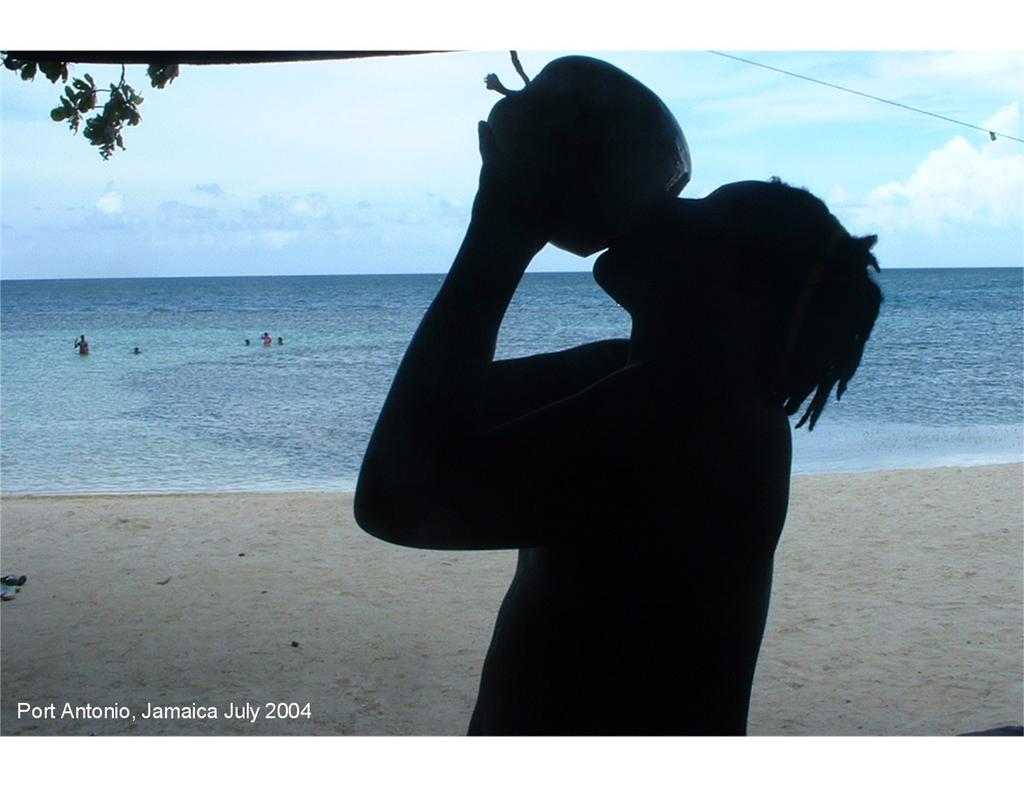
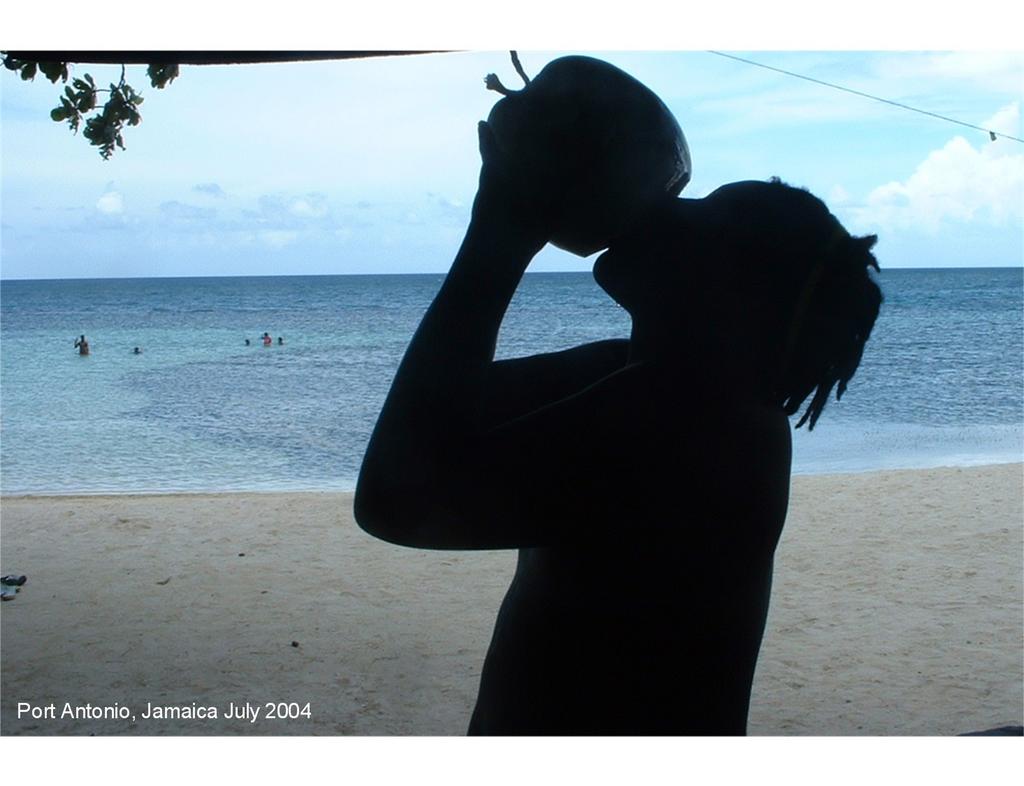
Here's a picture I took of my son Andrew while we were on vacation in Jamaica last year. He's drinking coconut water on the beach in Port Antonio.

Wednesday, August 10, 2005

Wednesday, May 04, 2005

Got Soca?

IslandMix - powered by Soca/Calypso

Check out Island Mix. Lots of soca songs to listen to, cd's to buy and plenty ole talk!

Monday, April 04, 2005

Download free music - a primer

The New York Times > Arts > Music > Critic's Notebook: No Fears: Laptop D.J.'s Have a Feast

CRITIC'S NOTEBOOK
No Fears: Laptop D.J.'s Have a Feast
By JON PARELES

Published: September 10, 2004


OWNLOADING music from the Internet is not illegal. Plenty of music available online is not just free but also easily available, legal and — most important — worth hearing.

That fact may come as a surprise after highly publicized lawsuits by the Recording Industry Association of America, representing major labels, against fans using peer-to-peer programs like Grokster and EDonkey to collect music on the Web. But the fine print of those lawsuits makes clear that fans are being sued not for downloading but for unauthorized distribution: leaving music in a shared folder for other peer-to-peer users to take. As copyright holders, the labels have the exclusive legal right to distribute the music recorded for them, even if technology now makes that right nearly impossible to enforce.


Recording companies have tried and failed to shut down decentralized file-sharing networks the way they closed the original Napster. (That name is now being used for a paid-download service.)

Courts have ruled that the services can continue because they are also used to exchange material that does not infringe on recording-company copyrights. At the same time, a bill before Congress, the Inducing Infringement of Copyrights Act of 2004, seeks to restrict the way file-sharing programs are constructed.

While the recording business litigates and lobbies over music being given away online, countless musicians are taking advantage of the Internet to get their music heard. They are betting that if they give away a song or two, they will build audiences, promote live shows and sell more recordings.

As with the rest of the free content on the Internet, there's no guaranteed quality control. Lucas Gonze, whose webjay.org lets music fans post playlists that connect to free music and video, describes free Internet music as "a flea market the size of Valhalla."

The first place to look for free music online is at musicians' own sites. Many performers, from Bob Dylan (www.bobdylan.com) to the Yeah Yeah Yeahs (www.yeahyeahyeahs.com), post hard-to-find songs for listening: some as free downloads, some as streaming audio (which can be recorded with a free program like StepVoice at www.stepvoice.com). A next place to look is the labels, particularly independent rock and electronic labels like Matador (www.matadorrecords .com/music/mp3s.html), Vagrant (www.vagrant .com/vagrant/audio/audio.jsp), Barsuk (www.barsuk .com), Saddle Creek (www.saddle-creek.com) or Tigerbeat6 (www.tigerbeat6.com/html/catalogue.htm).

Many public radio stations also maintain music archives for streaming or downloading. Among them are the classical-music station WNYC (www .wnyc.org) and eclectic stations like WFMU in Jersey City (www.wfmu.org) and KCRW in Santa Monica, Calif. (www.kcrw.org), all of which have troves of live performances. MTV (at www.mtv.com) presents an entire album each week as an audio stream.

Following is a selection of sites offering free music online. Most of them are best used with a either a broadband connection or nearly infinite patience. While major-label recordings are largely (but not entirely) off limits, there's more than enough available music to satisfy every listener.

Epitonic

The first and best place to look for any band with an independent recording is www.epitonic.com, a superbly organized site that is likely to have music from nearly everyone heard on college radio. It includes not only downloadable songs but also biographical information and links for hundreds of acts, grouped under genres and subgenres. And it has an invaluable "Similar Artists" feature that can direct fans of one band to dozens of potential new favorites. Within Epitonic's huge roster is at least a song or two from some major-label acts, among them the New York band Secret Machines, the Texas band Sparta and the English bands Radiohead and Spiritualized. But independent bands like Bright Eyes or Godspeed You Black Emperor are every bit as good.

Webjay

At www.webjay.org, music fans share their Web finds with the world. There's no music on the site, just lists of links that allow users either to play entire lists or to download items directly one by one; it also includes links to videos and news sound bites. Webjay is something like the lists submitted by customers at www .amazon.com, but with connections to the music itself. As such, it's only as good as the widely varied skills of its contributors, and its links aren't always dependable. But it is a way for musical obsessives like bigwavedave to share his fondness for garage-rock or for OddioKatya to point listeners toward a wide assortment of Brazilian songs.

Furthurnet

Before the Internet became ubiquitous, the Grateful Dead's fans built up their own network to exchange concert recordings, a network that expanded as other jam bands sprang up. The logical extension of the process is Furthurnet (www.furthurnet .com). It is a peer-to-peer network that trades only recordings of bands that encourage listeners to record concerts: not just the Dead but Phish, Gov't Mule, Dave Matthews Band, Los Lobos, Wilco and David Byrne as well. Users need to install a program available on the Web site. Most of the available concert recordings don't use MP3 files, but a better quality audio format, SHN, which also requires some software installation. It's easy; information on the site explains all the technicalities.

Another connection for jam bands is www.etree.org, which points listeners toward recordings stored online and is equally fastidious about high fidelity. Meanwhile, concert recordings of all sorts, from vintage 1960's bootlegs to music only a few days old, have been traded at www.sharingthegroove.org, although the site is currently undergoing maintenance.

The Library of Congress

Through the years, tax dollars have supported researchers like Alan Lomax on excursions to collect music from every nook and cranny and tradition they could discover across the United States. The Library of Congress has made a considerable amount available free online. A place to start is the American Memory Collection (http://memory .loc.gov/ammem/audio.html), with fiddle tunes, American Indian music, border music from the Rio Grande, Dust Bowl songs and more.

Folkways Records

In 1987, the Smithsonian Institution bought the catalog of Folkways Records, which had set out to document every sound in the world and continues to support projects like a 20-disc collection of Indonesian music. Many of the Folkways recordings can be heard on the Web at www .folkways.si.edu, from "Classical Music of Iran" to "Creole Music of Suriname" to "Music of Indonesia Vol. 1: Songs Before Dawn."

Internet Archive

The Internet Archive (www. .archive.org) has set out to preserve material that might otherwise disappear from the Internet, including Web pages, documents, books and video clips as well as audio, and it includes a Live Music Archive with more than 10,000 concerts via etree.org. Most are from jam bands, but there is plenty to choose from. (More than a million people have downloaded Grateful Dead music from the archive.) The archive also includes an assortment of other audio under All Collections, which has 131 songs from 78-r.p.m. discs, and more than 3,000 songs on what it calls netlabels, most of them releasing electronic music. Try the exotica-tinged selections from Monotonik.

Iuma

The Internet Underground Music Archive (www.iuma.org) was a pioneer of free Internet music. It was founded in 1993 as a place for musicians to post their own music online, and it just keeps on expanding. Unfortunately, it is both overwhelming and overwhelmed; finding a good song requires extraordinary luck, and downloading it will take a while. Like the other send-it-yourself sites noted here, Iuma can make a user appreciate what record company scouts do.

Garageband

Hopefuls face Darwinian competition at www.garageband.com, where musicians are encouraged to rate 30 songs before submitting one of their own (or pay a $19.99 fee instead) and other listeners are also assigned tracks to rate. The songs that rise to the top of the charts have a chance to be heard on Garageband's radio outlets or collected on its compilation albums. Garageband demands original songs, not cover versions, and its top-rated ones tend to sound more professional, if not always more distinctive, than those at other mass upload sites.

CNet

The computer experts at CNet include an extensive selection of music among their software downloads at http://music.download.com. A vast bulk of the music is submitted by musicians themselves, so there are a lot of derivative sounds to wade through, but the well-organized site also includes worthwhile bands as Editor's Picks, currently including Dios and Ex Models.

Vitaminic

A huge site based in England, www.vitaminic.co.uk, offers tens of thousands of aspiring bands and a smattering of better-known acts, although brand-name bands like Franz Ferdinand tend to offer only streaming audio rather than downloads. But the site is well organized and also includes video clips from the likes of Nick Cave.

BeSonic

A European site where musicians can place their songs online, www

.besonic.com has a slightly more international perspective than the other newcomer sites. Rankings and recommendations help visitors sift the material. Registration is required for downloading.

Pure Volume

More than 76,000 songs are available at yet another site for aspiring musicians, www.purevolume.com, which is strongly weighted toward rock. To winnow the site, try the Pure Picks column or look under the category Music for Top Artists (Signed).

DMusic

Musicians can also post their own songs on DMusic (www.dmusic .com). It helps users wade through more than 17,000 acts — an overwhelming majority categorized as alternative or rock — by listing DM Picks and by having users give songs a thumbs-up or thumbs-down and append comments. As with Iuma, most are amateur submissions, with plenty of jokes, but there are some enjoyable tracks scattered among the picks.

Smart-Music

Dance-music experimenters dominate at www.smart-music.net, a selective site that draws its downloadable MP3's from hard-to-find small labels. Dipping into the genres and subgenres of electronica, Smart-Music has about 300 songs available from (relatively) well-known groups like Mouse on Mars and Zero 7 as well as basement laptop obsessives, and a high percentage of them turn out to be worthwhile.

Ragga-Jungle

Slow, deep reggae bass lines are the foundation for whole families of dance music represented at www.ragga-jungle.com. It's an outlet for amateur and professional producers and toasters (rappers), and the downloadable songs, available free after registration, include echoey dub-reggae vamps, sparse dance-hall productions and frenetic jungle tracks. Each track has ratings and comments, and quick streaming allows users to sample tracks before committing to a download. Contender for best title: "A Waste of Half an Hour of My Life, and Four Minutes of Yours" by the Archangel.

Classic Cat

With so much classical music in the public domain, it's a surprise that there aren't more free downloadable sites offering it, although the length of classical compositions can make them inconvenient to download. At www.classiccat.net, it's possible to search by composer, from Monteverdi to Messiaen. The selection is spotty and links don't always work, but it's a start.

Asian Classical

Need some Indonesian gamelan music? On the Internet at www .asianclassicalmp3.org, a dedicated collector of Asian music has transferred recordings from cassettes to downloadable MP3's. The site includes music from nine countries, including 28 minutes of gamelan music from Java.

Iraqi Music

The straightforwardly named www.iraqimusic.com is a resource for both the classical Iraqi improvisations called maqams and more recent Iraqi recordings based on traditional (and thus noncopyrighted) songs. "Sister Sites" provides links to other sites with Middle Eastern music.

Trama

A Brazilian record label, Trama (www.tramavirtual.com), offers about 10,000 MP3's, primarily from local Brazilian bands. The site is in Portuguese and requires users to sign up, but after that, it is fairly easy to navigate. "Baixar" means download.

Micromusic

The Internet is home to countless obsessives. The ones gathered at www.micromusic.net make their electronic music from the sounds of the first primitive video games. Proud of what they can generate from eight-bit gizmos, they have placed hundreds of blipping, buzzing ditties online, garnering the attention of Malcolm McLaren, the Sex Pistols' manager, among others. Registration is required, but it's a modest inconvenience on the way to tunes like "How Bleep Is My Love."

Wednesday, March 16, 2005

The Hottest item on TV


Turn Up the Heat with G.Garvin


Check out G. Garvin on TV One on DirecTV channel 241 Wednesdays 8:00 PM. If you don't already have DirecTV, go get it now. This brother is finer than fine. And he can cook too!!! Ladies, It's worth the price of the subscription just to watch this man handle his VERY large pepper mill every week. Umm, Umm, Umm sizzling hot!!!!!!

Tuesday, February 22, 2005

Wednesday, February 09, 2005

OMG!!! What a body!


Ok I saw this on someone's Profile and I was floored by the impressive artwork ;-)

Who Knew!! WWW.MachelMontano.com

Xtatik Ltd.

Now I can listen to "You" my favorite song for 2005 on demand. You done know Machel Montano wrote that song especially for me!!

Well you can also listen to other tracks as well, and even view the music video for Music Farm.

Be sure to check out the MadMan Karaoke in the games section.